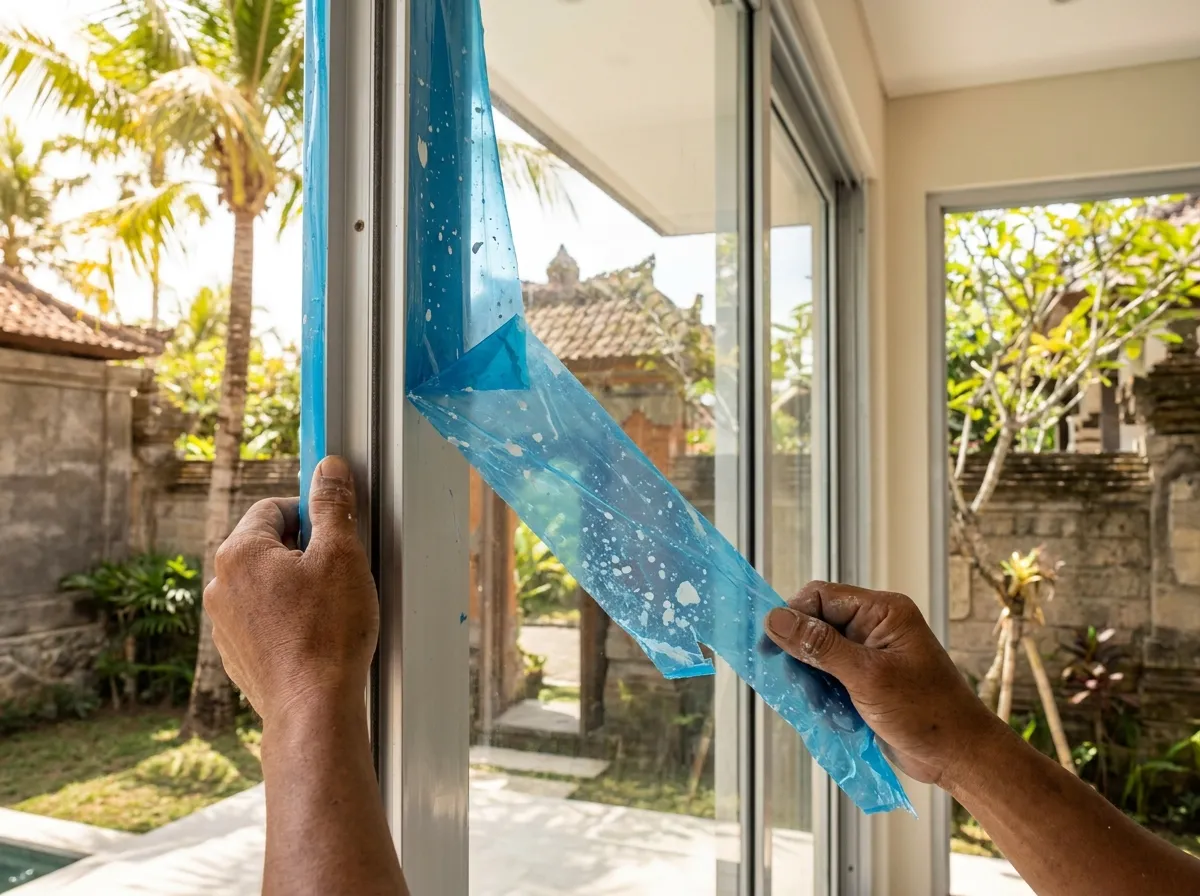
Renovation cleaning in Bali typically happens in two critical phases: a mid-renovation clean after structural and wet trades are complete before finish trades begin, and a final clean after all work is done. The mid-renovation clean matters more than most owners realise. Tiling, painting and joinery applied over dusty substrates from the previous phase shows quality problems immediately: adhesive bond failures in dusty tile beds, paint applied over cement dust showing as a rough texture in raking light, silicone seals contaminated by loose surface particles. Providing a clean substrate for each finish phase is part of achieving quality finish work — it's not a luxury, it's the foundation.
Renovation Cleaning Phases
Post-Demolition Clean
After demolition and before new construction begins. Remove debris and dust from the renovation zone and protect adjacent areas that aren't being renovated from cross-contamination. Critical for properties where renovation is staged — one area renovating while the rest is occupied or in use.
Pre-Finish Clean
After structural and wet trades (concrete, block, plaster, screed) and before finish application (tiling, painting, flooring). This clean gives the finishing trades a genuinely clean surface to work on. The quality of finish work is substantially determined by the quality of the surface it's applied to.
Final Post-Renovation Clean
After all work is complete. Full systematic clean covering all areas of the renovation scope and all affected adjacent areas. Equivalent to the villa post-build scope applied to renovation scale.
Between-Trades Clean
Between one trade completing and the next starting — for example, after tilers leave and before painters arrive. Keeps each trade working in clean conditions, reduces the risk of one trade's debris affecting another's work quality or requiring re-cleaning of recently completed work.
Why Sequencing the Clean Matters in Bali
Bali's tropical climate makes clean timing more critical than in temperate countries. Cement plaster and screed take longer to fully cure in high humidity, and dust settles fast in open-air villa layouts where airflow carries it room to room. Clean too early and you drag a half-set surface; clean too late and contamination has already been sealed under the next finish. We coordinate each clean to your build programme so finish trades always work onto a genuinely clean, cured substrate.
This matters most on the materials Bali builds with: dust trapped under tile adhesive weakens the bond, cement film under paint shows as a rough texture in raking light, and loose particles in fresh silicone joints stop the seal adhering. A small, well-timed mid-renovation clean is far cheaper than re-doing finish work that failed because of a dirty substrate.
Renovation Cleaning Prices
Guide ranges in IDR, confirmed by WhatsApp quote against your schedule. Full detail on the pricing page.
| Clean Type | Guide Price (IDR) | Notes |
|---|---|---|
| Mid-renovation / between-trades clean | 600,000–1,200,000 | Area and phase dependent |
| Final post-renovation clean | 1,300,000–3,500,000 | Scaled to renovation scope |
Related: villa post-build clean, final clean & handover and commercial pre-opening. Background reading: our Bali materials cleaning guide.
Common Renovation Cleaning Scenarios We Handle
Most renovation cleans we run in Bali fall into a few recognisable patterns. A villa owner is living in one wing while a bathroom or kitchen is rebuilt in another, and needs the renovation zone sealed off and cleaned so dust does not migrate into occupied rooms. A holiday-rental owner is racing to reopen between guest bookings and needs a fast, thorough final clean the day the trades finish. A project manager is staging a multi-room refurbishment and wants a between-trades clean each time one crew hands over to the next, so no one's work is spoiled by the previous trade's debris.
In every case the principle is the same: a clean surface at each phase protects the quality of the next. We adapt team size and timing to the situation — a single cleaner for a quick between-trades pass, a full team for a final renovation clean — and we always confirm the scope and price with you on WhatsApp before we start.
Frequently Asked Questions
Why is a mid-renovation clean worth doing?
A clean substrate for each finish phase produces better quality finish work. Tiling over dusty screed, painting over cement film, and applying silicone to contaminated surfaces all produce quality problems immediately visible in raking light or under the right conditions. The cost of the mid-renovation clean is small relative to remedying poor finish quality after the fact.
How long after plastering can you clean the surface?
Plaster needs to be fully set before cleaning — typically 24–48 hours for standard cement plaster in Bali's conditions. Cleaning wet plaster drags the surface and damages the finish. We coordinate the cleaning timing with your build programme to ensure correct sequencing.
Renovation in Progress or Planned?
Tell us the renovation scope, current phase, and schedule. We'll plan the cleaning around your build programme.
Plan Your Cleaning Schedule